
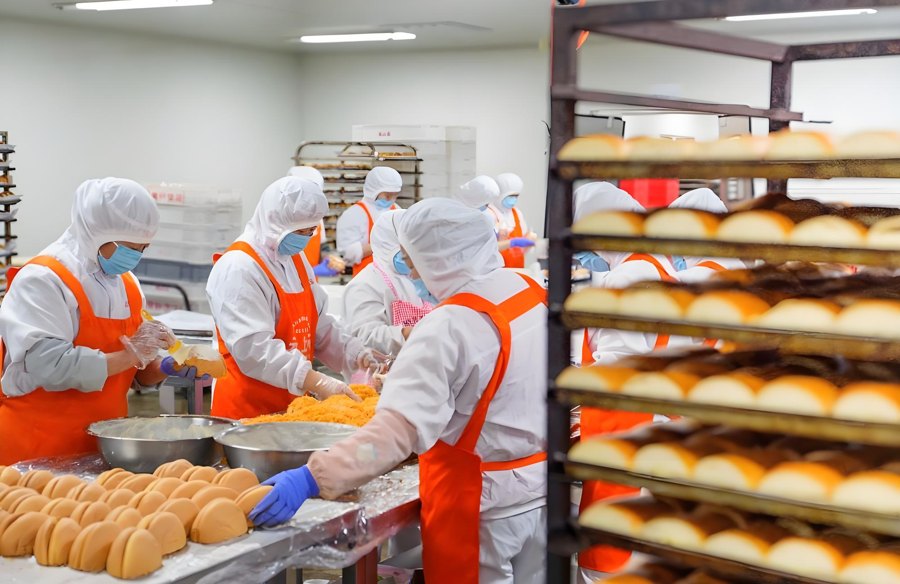
What makes prepared food different
Prepared food is where freezing meets formulation. A dumpling has a thin skin and a dense filling; a ready meal has components of different density in the same tray; a meatball is fragile until the surface is set. The freezer has to handle the product without deforming it and freeze the slowest component through.
The line also runs a wider product range than a primary processing plant, so changeover and recipe control matter as much as capacity.
Machine selection
| Product | Format | Recommended machine |
|---|---|---|
| Dumplings, wontons | Loose, IQF | LN2 tunnel with belt agitation |
| Meatballs, patties | Loose or tray | LN2 tunnel |
| Ready meals in trays | Tray | LN2 tunnel, tray guides |
| Sauces, fillings | Packed | Immersion freezer |
| Small-batch, many SKUs | Trolley | LN2 cabinet freezer |
Line considerations
- Fragile product handling. Belt transfer points and agitation intensity are set for the product; a tunnel tuned for shrimp will damage dumplings.
- Mixed densities. A ready meal with rice, meat and sauce freezes at three different rates. Dwell time is set by the slowest component, and the proposal states which one that is.
- Allergen and hygiene control. Where the line runs multiple recipes, the machine layout should allow cleaning between products without a full strip-down.
- Small batches. Below roughly 500 kg/h, a cabinet with trolleys is often more practical than a tunnel because changeover is faster.
Quality checkpoints
- Core temperature in the densest component.
- Shape retention after freezing.
- Free-flow for IQF product — no clumping.
- Surface ice and package appearance for retail packs.
Request a configuration
The more you tell us about the product and the line, the more precise the proposal.